3/6/2026
Author: Astopia TeamThe World in the Shadow of Eclipses: Iran, Power Shifts, and the Astrological Cycles Behind Them
In astrology, eclipse seasons are often seen as periods that influence not only personal lives, but also global politics and the balance of power.
Throughout history, eclipses have often accompanied moments when power structures shift. The fall of kingdoms, the beginning of wars, and the overthrow of leaders have frequently occurred under the shadow of an eclipse in the sky.
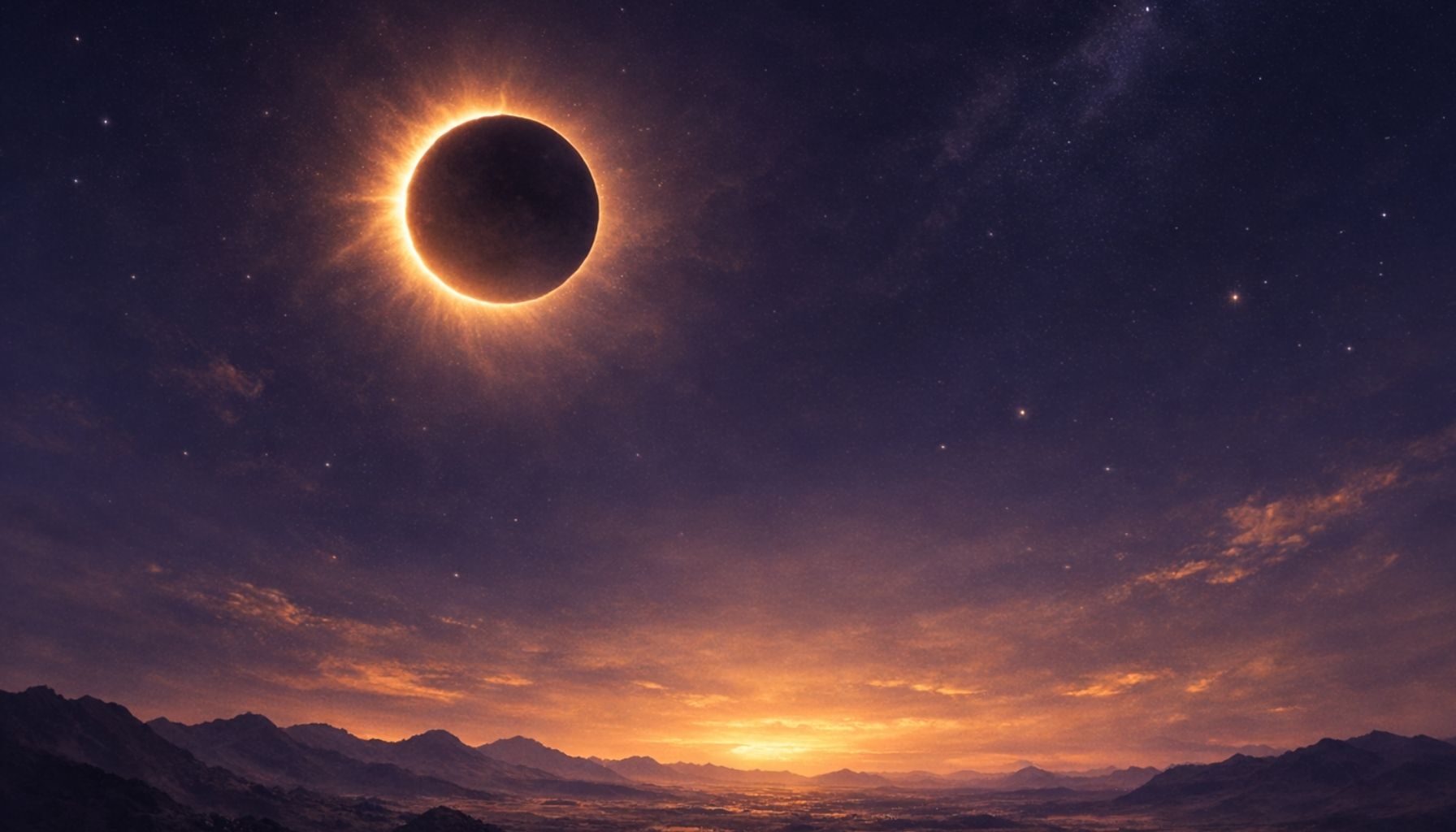
The eclipse season of 2026 appears to mark exactly such a threshold. Beginning with the Solar Eclipse in Aquarius on February 17 and followed by the Lunar Eclipse in Virgo on March 3, this period signaled the potential for powerful events to unfold on a collective level.
And that is precisely what happened.
Right in the middle of the eclipse season, the United States and Israel carried out a strike against Iran. The attack resulted in the death of Ali Hosseini Khamenei, one of the most powerful political figures Iran has had for decades, along with significant civilian casualties.
From an astrological perspective, this event appears to be more than just a political or military development. It seems to coincide with the intersection of several powerful cycles unfolding simultaneously in the sky.
Why Are Eclipses So Powerful?
Eclipses occur when a New Moon or Full Moon takes place near the lunar nodes.
In astrology, eclipses are often considered accelerators of fate. Events that might normally take years to unfold can suddenly become visible during eclipse periods.
Sometimes it is the fall of a leader…
Sometimes the beginning of a war…
And sometimes the turning point of a nation.
Ancient astrologers often associated eclipses with “the fall of kings.” The Sun and the Moon represent light in the sky, and when that light is temporarily obscured during an eclipse, it was interpreted as a disruption of the cosmic order.
For this reason, it is not surprising that throughout history, eclipses have often been followed by leadership changes, political crises, and major shifts in power.
This eclipse season also carries a striking symbolic detail.
Ali Hosseini Khamenei, Iran’s long-standing leader, was born on April 19, 1939, during a solar eclipse period. And between two eclipses, he lost his life under the bombardment of countries led by two leaders who themselves were born during eclipse periods.
Similarly, the leaders of the two countries that carried out the attack were both born during eclipses. Donald Trump was born on June 14, 1946, during a lunar eclipse, and Benjamin Netanyahu was born on October 21, 1949, during a solar eclipse.
In astrology, people born near eclipses are often believed to have lives that intersect with major collective events.
The 2026 Aquarius and Virgo Eclipses: The Shaking of Power Systems
The first eclipse of 2026 occurred on February 17 in the sign of Aquarius. This was followed by a Lunar Eclipse in Virgo on March 3.
In astrology, eclipses function as accelerators. They speed up events, bring hidden processes into the open, and often mark dramatic beginnings or endings.
Aquarius eclipses tend to question collective systems, networks of power, and the way societies organize themselves. Technology, ideologies, political movements, and social structures can undergo sudden shifts under this influence.
Virgo eclipses, on the other hand, reveal the details within existing systems. They can expose where structures that appear stable on the surface are actually beginning to crack.
The events that unfolded on the world stage during this eclipse season are also striking.
In Mexico, a cartel leader was killed during a military operation, triggering widespread violence in the city. In the United Kingdom, Prince Andrew was arrested in connection with the Jeffrey Epstein case. And in Iran, Khamenei—who had ruled under a strict regime for the past 36 years, effectively spanning an entire Saturn–Neptune cycle—was killed.
All of these events unfolded right in the middle of the eclipse season.
The Saturn–Neptune Conjunction: The Beginning of a New World Cycle
Eclipses are not the only reason this period is significant. The sky is also hosting a much rarer cycle: the conjunction of Saturn and Neptune.
These two planets come together roughly every 36 years. The previous conjunction took place in 1989, a year that marked profound turning points in world history.
The Berlin Wall fell.
The Soviet Union began to dissolve.
And in the same year, the World Wide Web emerged.
Periods like this often coincide with unexpected shifts in the global order.
In 2026, Saturn and Neptune meet once again, forming their conjunction at 0 degrees Aries.
Saturn represents structure, boundaries, and systems. Neptune dissolves those boundaries, blurring and reshaping them. When these two planets come together, it often signals periods when existing systems begin to unravel and a new global order starts to take form.
It is also symbolically striking that Khamenei came to power in 1989. That date coincides almost exactly with the beginning of the previous Saturn–Neptune cycle.
In other words, his leadership effectively lasted for nearly an entire Saturn–Neptune cycle.
Mars–Uranus Square: The Breaking Point
Another major tension in the sky during this period was the square aspect between Mars and Uranus. Between January 23 and March 2, 2026, Mars moved through Aquarius while forming a challenging aspect with Uranus. This aspect reached its strongest point around February 27.
Mars is the planet of war.
Uranus represents sudden change, chaos, and the unexpected.
Hard aspects between these two planets are often associated with explosive events. What makes this alignment particularly striking is that it was not only a general atmospheric influence in the sky.
The degrees where Mars was positioned were directly activating the Moon in the United States’ natal chart, while the degrees of Uranus were making direct contact with the Moon in Iran’s natal chart.
Such precise correlations are relatively rare in astrology—and they often accompany events that leave a lasting mark on history.
How Do Progressed Charts Work in the Astrological Destiny of Nations?
In astrology, just like individuals, countries also have birth charts. These charts are calculated based on the moment of a nation’s founding and are used to understand that country’s collective character, potentials, and periods of crisis.
However, a nation’s destiny is not limited to its natal chart alone. Over time, that chart also evolves and changes.
One of the techniques used to examine this process is progressed charts. Progressed charts help astrologers understand how a country evolves over time and during which periods it may experience significant turning points.
Astrologers who attempt to interpret global events rarely rely on a single chart. The chart of the country where the event takes place, the charts of the leaders at the center of the situation, and often the progressed charts of states that play a decisive role in world politics are examined together.
These techniques become especially meaningful during collectively intense periods such as eclipse seasons. Eclipses often create not only personal turning points but also significant shifts in the destiny of nations.
At Astopia, when we evaluate such periods, we prefer to interpret the cycles in the sky not through the lens of a single country, but through the relationships these charts form with one another.
When the developments of the 2026 eclipse season are considered alongside other cycles unfolding in the sky, a particularly striking picture begins to emerge.
Mars Retrograde in the United States’ Progressed Chart: Prolonged Wars and Difficult Victories
When we examine the progressed chart of the United States, one detail stands out: Mars retrograde.
In astrology, Mars represents war, military power, and strategic action. When retrograde, this energy can often manifest as:
- flawed strategies
- prolonged conflicts
- military operations that fail to produce clear results
In the United States’ progressed chart, Mars turned retrograde in 2005, and according to current calculations, this cycle is expected to continue until 2087.
This is an exceptionally long period and may point to more complex dynamics in military strategy.
The war in Afghanistan can be seen as a powerful example of how this cycle may operate. The conflict lasted for years, and the outcomes were far less definitive than initially expected.
The Moon in Aries in the United States’ Progressed Chart: Rapid Reactions and Aggressive Decisions
Another striking indicator in the United States’ progressed chart is the Moon moving through Aries. In astrology, the Moon represents collective emotions and the internal reflexes of a society.
Aries, on the other hand, is associated with action, confrontation, and quick responses. This placement can often trigger behavioral patterns such as:
- rapid military interventions
- strong political reactions
- sudden strategic decisions
However, there is a critical detail here. The ruler of Aries is Mars—and Mars is currently retrograde in the progressed chart.
This can sometimes create the following dynamic: the motivation to take action may be strong, yet the outcomes of those actions may not unfold as expected.
This energy also intersects with another tension in the sky. In early 2026, the hard aspect formed between Mars and Uranus was a powerful combination often linked with sudden military actions and unexpected developments.
Mars is the planet of war, while Uranus symbolizes sudden disruptions and unforeseen events. Historically, such aspects have often been associated with explosive situations.
Sun–Mars Square in the United States’ Progressed Chart: A Period of Heightened Tension
Another significant indicator in the United States’ progressed chart is the challenging aspect between the Sun and Mars. In astrology, the Sun represents leadership, authority, and the central identity of a nation.
Mars, by contrast, embodies struggle and conflict. Hard aspects between these two planets often activate themes such as:
- political tension
- military crises
- tests of leadership
Classical astrology commentator Alan Leo noted that periods like these can be particularly sensitive, and that actions taken under such skies may lead to heavy consequences.
Under these kinds of celestial influences, decisions can sometimes trigger unexpected chains of events.
The Timing of Events: The Solar Arc Technique
One of the powerful methods used in astrology to examine the timing of events is Solar Arc progressions. This technique is particularly effective in highlighting major turning points.
One striking indicator in the United States’ Solar Arc chart is Mars positioned at 29 degrees in Aquarius.
In astrology, the 29th degree is considered a critical degree. It signals that a cycle is nearing completion and that the energy surrounding it is becoming intensified.
When Mars occupies this point, military and strategic matters can become more visible. This may allow crises to escalate quickly or lead to unexpected developments.
Solar Arc Neptune: Uncertainty, Propaganda, and Information Wars
Another notable indicator is Solar Arc Neptune entering the sign of Gemini.
In astrology, Neptune represents foggy or unclear territories. Periods when the boundary between reality and perception becomes blurred often emerge under Neptune’s influence.
Themes that frequently appear during such periods include:
- propaganda
- misinformation
- media wars
- uncertainty
When we consider that modern warfare is not only military but also psychological and information-based, this placement becomes particularly striking. The flow of information and the management of perception can sometimes become as powerful a tool as warfare itself.
The Months Ahead: The Tension Is Not Over
Astrologers believe that these events may not be limited to the eclipse season alone. The concentration of planets forming in Aries during March and April could reignite tensions.
On July 3, the conjunction of Mars and Uranus may create a highly explosive combination in the sky.
And the Solar Eclipse in Leo on August 12 is already being discussed as a moment that could bring particularly challenging influences for world leaders.
Eclipses Shift the Balance of Power
Eclipses often raise a fundamental question: who truly holds power? Yet what eclipses reveal is not always the power itself, but the fragility of power structures.
Sometimes systems that appear strong begin to unravel suddenly. Sometimes new leaders emerge. And sometimes the balance of the world shifts in unexpected ways.
The leadership changes and political fractures that occurred during this eclipse season strongly echo this symbolism.
What Does the Sky Tell Us About the Iran Attack?
Astrology does not claim to predict the future with certainty. But it does reveal something essential: the rhythm of time.
Some periods are not ordinary. Some moments mark the turning points of history.
The eclipse season we are currently experiencing may be one of those thresholds. At times, the sky begins to rewrite not only our personal lives, but our collective story.
And the direction that story takes is often shaped by the decisions people make.