

7/22/2026
Author: Astopia TeamWhen Is the Solar Eclipse in August 2026? Visibility, Times, and How to Watch It Safely
Total vs. Partial: What Americans Will Actually See
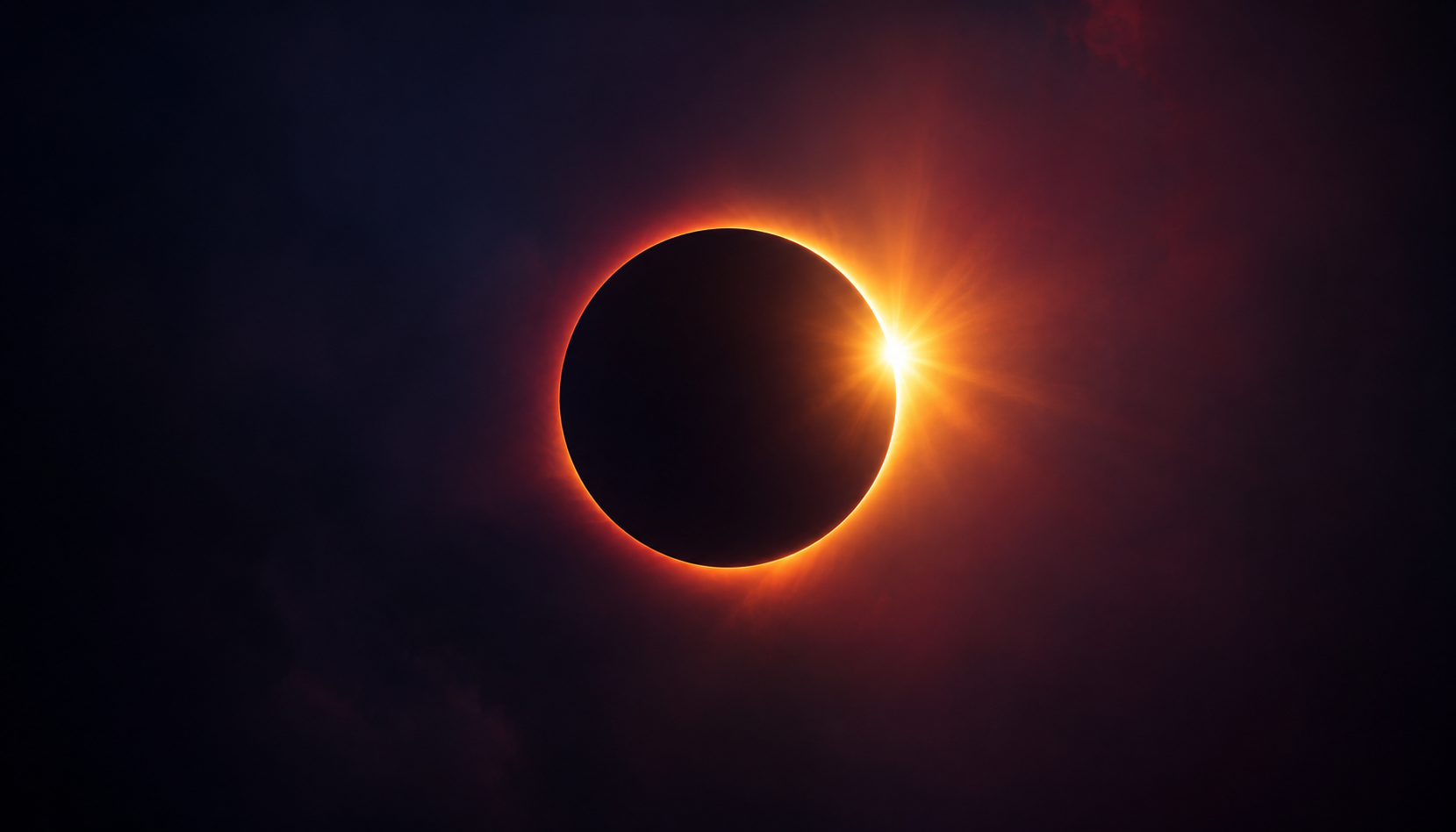
A total solar eclipse occurs when the Moon fully covers the Sun for observers standing in a narrow "path of totality." On August 12, 2026, that path crosses eastern Greenland, western Iceland, the Atlantic Ocean, and northern Spain — Europe's first mainland total eclipse since 1999. Outside that path, people see a partial eclipse instead: the Moon takes a "bite" out of the Sun rather than covering it completely.
No part of North America falls inside the path of totality this time. The US and Canada will only experience the partial phase, with the deepest views concentrated in Alaska and the northeastern states. If you're picturing the dramatic darkened skies of the 2024 "Great North American Eclipse," this one is a much smaller event for US viewers — but still worth stepping outside for, especially with a pair of eclipse glasses in hand.
Exact Times by US Region
Because the Moon's shadow sweeps from west to east relative to Earth's rotation, the timing looks different depending on where you are:
| Location | Local Peak Time | Sun Coverage |
| Fairbanks, Alaska | ~8:27 a.m. AKDT | ~37% |
| Anchorage, Alaska | ~8:21 a.m. AKDT | ~28% |
| Presque Isle, Maine | ~1:50 p.m. EDT | ~28% |
| Bangor, Maine | ~1:53 p.m. EDT | ~23% |
| Portland, Maine | ~1:53 p.m. EDT | ~19% |
| Boston, Massachusetts | ~1:55 p.m. EDT | ~16% |
| New York City, New York | ~1:54 p.m. EDT | ~9–10% |
| Philadelphia, Pennsylvania | ~1:53 p.m. EDT | ~7% |
| Washington, D.C. | ~1:53 p.m. EDT | ~4% |
In Alaska and northern Canada, the eclipse plays out in the morning. In the northeastern contiguous US, it begins around midday and peaks in the early-to-mid afternoon. The general rule: the farther northeast you are, the more of the Sun you'll see covered — coverage drops off quickly as you move south and west, and much of the central and southern US won't see any eclipse at all.
Best States and Cities for Viewing
If you're deciding whether it's worth building your afternoon around, here's the honest ranking:
- Fairbanks, Alaska — the best view in the US at roughly 37% coverage, mid-morning.
- Anchorage, Alaska — a strong second at around 28%, also mid-morning.
- Presque Isle, Maine — the best view in the contiguous 48 states, around 28% in the early afternoon.
- Bangor and Portland, Maine — solid views in the 19–23% range, easy to reach if you're already in New England.
- Boston, Massachusetts — a noticeable partial eclipse at around 16%.
Beyond these, the eclipse is visible at lower percentages across parts of the Northeast and Upper Midwest, including New York, New Jersey, Pennsylvania, Connecticut, Rhode Island, Vermont, New Hampshire, Michigan, and Minnesota, generally dropping below 10% coverage the farther south and west you go. If you're outside this general region, the eclipse won't be visible from your location at all.
How to Watch Safely
Because the US only sees the partial phase, it is never safe to look at the eclipse without protection — unlike totality, there's no moment where the Sun is fully blocked and safe to view directly.
- Use ISO 12312-2 certified eclipse glasses. Regular sunglasses, no matter how dark, do not offer adequate protection.
- Try a pinhole projector if you don't have glasses — a simple, free way to view the eclipse indirectly by projecting it onto a surface.
- Check your camera and phone settings — pointing an unfiltered lens at the Sun can damage sensors just as it can damage eyes.
- Watch the timing window closely — the visible effect is brief and subtle at low coverage percentages, so know your local peak time in advance.
Bonus: It Coincides With the Perseid Meteor Shower
One detail most coverage buries: August 12 is also right at the peak of the Perseid meteor shower, one of the most reliable meteor showers of the year. Because the eclipse means a new moon, skies will be darker than usual that night, which is good news if you're planning to stay up after the eclipse for meteor watching. It's a rare double-header — a daytime partial eclipse followed by a dark, moonless night of shooting stars.
What This Eclipse Means Astrologically
Beyond the astronomy, this eclipse carries real weight in astrology, too. It falls at 20° Leo, and Leo solar eclipses are historically tied to identity shifts, bold self-expression, and fated new beginnings — the kind of six-month arc where you stop hiding and start showing up as yourself. If your Sun, Moon, or Rising sign has any connection to Leo or Aquarius, this is one to pay attention to.
We've broken down exactly what this eclipse means for every zodiac sign — love, career, and the specific life area it activates for you — in a companion piece: Solar Eclipse in Leo, August 2026: What It Means for Every Zodiac Sign.
Want to see how it maps onto your actual birth chart instead of just your Sun sign? Astopia's eclipse forecast tool does that automatically using your birth time and location.
Frequently Asked Questions
Will the solar eclipse be visible in the US on August 12, 2026?
Yes, but only as a partial eclipse. The deepest US views are in Alaska (up to 37%) and Maine (up to 28%). No part of the US will see a total eclipse.
What time is the solar eclipse on August 12, 2026?
Timing varies by region. Alaska sees its peak around 8:21–8:27 a.m. AKDT. The Northeast US sees its peak in the early-to-mid afternoon, roughly 1:50–1:55 p.m. EDT.
Do I need eclipse glasses to watch a partial eclipse?
Yes, always. Unlike a total eclipse, a partial eclipse never reaches a safe moment to view the Sun with the naked eye. ISO 12312-2 certified glasses are required throughout.
Where is the best place to see the August 2026 eclipse?
Fairbanks and Anchorage, Alaska offer the deepest US coverage, followed by Presque Isle, Maine. Coverage decreases the farther south and west you travel.
Why isn't the total eclipse visible from the US this time?
The path of totality only crosses Greenland, Iceland, and northern Spain/Portugal. The US falls outside this path, so it only experiences the partial phase.
What does this eclipse mean astrologically?
It occurs at 20° Leo, a sign associated with identity, creativity, and self-expression. In astrology, Leo eclipses tend to trigger new beginnings tied to how boldly you show up as yourself. See our full zodiac breakdown for what it means for your specific sign.
Whether you're watching from Maine, Alaska, or anywhere in between, Astopia can tell you exactly how this eclipse — and every eclipse after it — lines up with your personal birth chart. Set it up once, and you'll never have to guess again.