
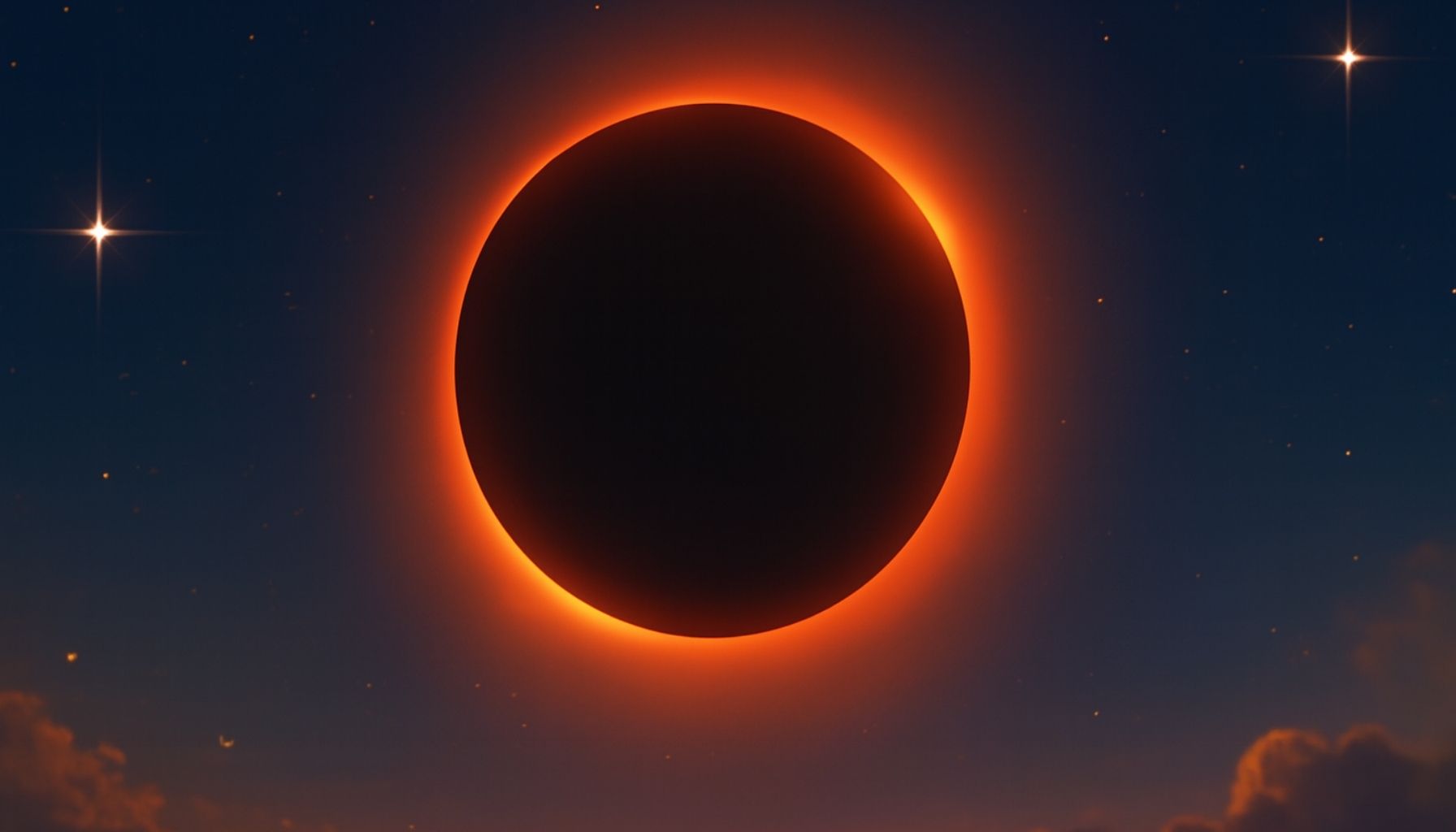
The 2027 Solar Eclipse: Date, Path, and Viewing Regions
The 2027 solar eclipse is already arousing great curiosity as one of the most impressive astronomical events of the modern era. This eclipse will offer an unforgettable experience as millions of people witness the sky. So, when will this solar eclipse happen, from which regions can it be viewed, and what does it mean for humanity? Both from a scientific and cultural perspective, this celestial event is set to be one of the most remarkable eclipses ever observed throughout history.
When Will the 2027 Solar Eclipse Occur?
The solar eclipse of 2027 will be observed on August 2, 2027. This date has already been marked on astronomical calendars because this eclipse will not just be a brief shadow but will feature a remarkably long period of totality. While an average total solar eclipse lasts between 2–4 minutes, the 2027 eclipse is expected to exceed 6 minutes. This long duration makes it one of the most impressive eclipses to be seen in the 21st century. Occurring in the summer months will also allow a wider audience to observe it.
To briefly touch upon what a solar eclipse is, it's an event that happens when the Moon passes between the Sun and the Earth, temporarily blocking the Sun's light. Since the 2027 eclipse falls into the total eclipse category, the Moon will completely cover the Sun's surface. This will cause the sky to darken during the day and make the Sun's outer atmosphere, called the corona, visible. This phase is especially valuable for scientists, as it offers a chance to observe structures on the Sun that are normally not visible.
How Does a Solar Eclipse Happen?
For a solar eclipse to occur, three celestial bodies must align in a specific way: the Sun, the Moon, and the Earth. When the Moon, in its orbit, passes between the Earth and the Sun, the Moon's shadow falls upon the Earth. If this shadow falls perfectly on certain regions of the Earth, a total solar eclipse occurs. If the Moon cannot fully cover the Sun but only shadows a large part of it, a partial or annular solar eclipse is observed. The eclipse that will take place in 2027 is a total solar eclipse.
Points called "nodes" play a critical role in the occurrence of eclipses. The Moon's orbit intersects the Earth's orbit around the Sun at certain points. A solar eclipse happens when a new moon phase coincides with one of these intersection points. During the 2027 eclipse, these conditions will align in an extraordinary way, resulting in a long-lasting total eclipse. This means the eclipse will not just be an astronomical coincidence but a perfect result of celestial mechanics, promising a unique visual spectacle for those watching the sky.
What are the Differences Between Partial and Annular Solar Eclipses?
Solar eclipses are categorized into different types. In a partial solar eclipse, the Moon covers only a part of the Sun. In this case, the sky doesn't completely darken; only a portion of the Sun becomes invisible. These eclipses happen frequently and can generally be observed from wider regions. A partial solar eclipse is the most common type experienced by the public, but it is not as dramatically powerful as a total eclipse.
An annular solar eclipse, however, offers a different visual spectacle. In this type of eclipse, the Moon is a little farther from the Earth, so it cannot completely cover the Sun. As a result, a ring of light, similar to a "ring of fire," forms around the Moon. Annular eclipses provide very impressive shots for photography. The 2027 eclipse, being a total eclipse, will cause the Sun to be completely darkened. So, while partial and annular eclipses have their visual charm, the sight awaiting us in 2027 will be a much rarer and more impressive experience.
How Often Do Solar Eclipses Occur?
Solar eclipses are not as rare as people think. On average, there are between 2 to 5 solar eclipses somewhere on Earth each year. However, the vast majority of these are partial eclipses. Total solar eclipses are less frequent and may not be observed every year. Seeing a total solar eclipse in the same location is much rarer; the time between two total eclipses in the same place is often hundreds of years. This makes the 2027 eclipse an extremely rare opportunity, especially for those living in North Africa and around the Mediterranean.
When comparing solar and lunar eclipses, lunar eclipses are experienced more frequently because they can be seen from many parts of the world. However, solar eclipses have more dramatic effects. The day turning to darkness, a brief drop in temperature, and even animals reacting to this sudden change are among the effects of a solar eclipse. In this respect, the 2027 solar eclipse will be a unique natural event, both for scientific observation and as a collective human experience.
Which Regions Will Be Able to View the 2027 Solar Eclipse?
The 2027 solar eclipse, due to its path, will be observable over a very wide area. The path of totality will begin in North Africa, pass over the Mediterranean, and extend to some parts of the Middle East. Countries like Egypt, Libya, Saudi Arabia, and Yemen will have the chance to experience the total phase of the eclipse. The southern coasts of Spain will also host this unique natural event. The western regions of Turkey, however, will only be able to observe the eclipse partially.
The exact path of totality is shared by astronomers on detailed maps. According to these maps, Cairo will be one of the cities where the eclipse can be seen most clearly and for the longest duration, with the total phase lasting over 6 minutes. In most of Europe, the eclipse will be visible as a partial eclipse. As a result, "solar eclipse tours" have already started to be organized in the tourism sector. Scientists, photographers, and astronomy enthusiasts are preparing to observe the eclipse live in these regions.
What are the Effects of a Solar Eclipse on Humans and Nature?
The effects of a solar eclipse are not limited to the sky; they also have noticeable consequences on nature and people. Scientific observations clearly show the changes that occur in the environment during an eclipse:
- Temperature Drop: The temperature decreases by a few degrees during an eclipse. This difference is more noticeable during long-lasting eclipses.
- Animal Behavior: Birds and nocturnal animals behave as if it's nighttime; birds return to their nests, and insects exhibit their nighttime behavior.
- Plant Reactions: When light is suddenly cut off, some plants close their flowers or show biological reactions specific to the night.
- Sky Observations: The Sun's corona becomes visible, which offers scientists a unique opportunity for observation.
From an astrological perspective, solar eclipses are interpreted as important turning points on individual and societal levels. It's suggested that the 2027 solar eclipse will be particularly linked to Leo themes:
- Leo's Influence: It could bring about new opportunities in leadership, creativity, and self-expression.
- Personal Transformation: People are expected to see an increase in courage, make new decisions, and start fresh.
- Societal Impact: The eclipse may signal the strengthening of community movements and an acceleration of change processes.
When the different perspectives of science and astrology are combined, it becomes clearer why a solar eclipse is such a fascinating event for humanity.
How to Prepare for the 2027 Solar Eclipse?
The 2027 solar eclipse is not just a celestial event; it's an experience that requires careful preparation. The most important thing for those who want to watch the eclipse is to properly plan their location. Cities along the path of totality will begin to fill with tourists months in advance, so early reservations for accommodation and transportation are critically important, especially in countries like Egypt, Spain, and Saudi Arabia. Also, since the total phase of the eclipse is short, you'll want to be in a clear, open area to get a good view of the sky.
Another aspect of preparation is safety. Looking directly at the Sun during a solar eclipse with the naked eye can cause serious eye damage. Therefore, ISO-certified eclipse glasses or telescopes with special filters must be used. Simple sunglasses or homemade solutions are absolutely not enough to provide protection. Additionally, for those who want to photograph the eclipse, professional camera filters are recommended. All these preparations are essential to make the eclipse both safe and unforgettable.
What Equipment Should Be Used for Solar Eclipse Observations?
The most basic equipment for solar eclipse observations is specially made solar glasses. These glasses block harmful ultraviolet rays, protecting eye health. If you are observing with a telescope or binoculars, special filters must be placed in front of these devices. Otherwise, the eyes can be seriously damaged. Especially during an event like the 2027 eclipse, which will last for a long time, protecting your eyes will be more important than ever.
For photographers, the equipment list is a bit more detailed. Lenses with solar filters, a tripod, and a timer function are necessary to capture the eclipse. Also, special solar filter adapters are available for smartphones. With this equipment, both professionals and amateur observers can safely record the different phases of the eclipse. Therefore, using the right equipment not only makes the eclipse experience safe but also visually impressive.
What Were Some of the Longest and Most Impressive Solar Eclipses in History?
The 2027 eclipse will be one of the longest-lasting total eclipses of the modern era. However, there have been even longer eclipses in history. The table below lists the dates, durations, and significance of some notable solar eclipses:
| Date | Duration | Observed Regions | Significance/Impact |
| July 11, 1991 | 6 minutes 53 seconds | Mexico, Pacific Ocean | Recorded as the longest total eclipse of the 20th century. |
| July 22, 2009 | 6 minutes 39 seconds | India, China, Pacific | Watched by millions of people across the Asian continent. |
| August 2, 2027 (Expected) | 6 minutes 23 seconds | North Africa, Mediterranean, Middle East | Will be one of the longest eclipses of the 21st century. |
| 585 BCE (Battle of the Lydians and Medes) | Unknown | Anatolia | The battle ended during the eclipse, which influenced historical events. |
Looking further back, historical records mention that a war between the Lydians and the Medes in 585 BCE came to an end due to a solar eclipse. The sudden darkening of the sky at that time instilled in the soldiers the belief that the eclipse was a divine sign, and the conflict stopped. This example shows that solar eclipses have great impacts not only scientifically but also culturally and historically. The 2027 eclipse will undoubtedly be remembered as an unforgettable event, both in astronomy and in human history.
Every eclipse season shifts the rhythm of the sky and brings us new influences. Sometimes it opens doors to fresh beginnings, sometimes it asks us to face the past. 🌑✨
To see how eclipses reflect in your life and learn their dates, download Astopia and explore the guidance of the stars.

